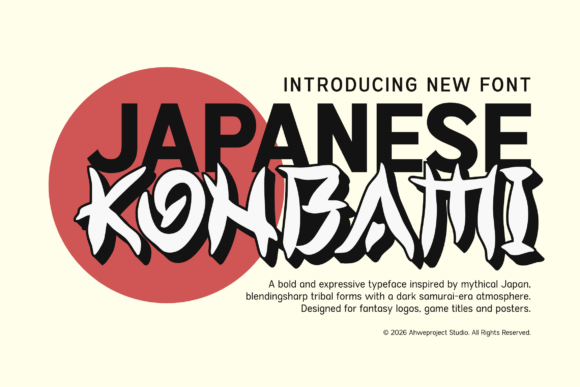
Konbami: The Bold Display Font for Handmade Branding
When you are running a handmade business, the difference between a product that feels generic and one that commands attention often comes down to typography. As someone who spends hours cutting vinyl, designing printable templates, and arranging labels for physical goods, I know that finding the right display font is about more than just aesthetics; it is about capturing a specific mood that resonates with your customers. That is why Konbami has become such an essential asset in my design toolkit. This bold Japanese-style typeface brings a strong, expressive, and powerful character to any project, bridging the gap between mystical cultural inspiration and modern tribal aesthetics.
Bringing Mystical Energy to Physical Products
The visual personality of Konbami is immediately striking. It does not whisper; it speaks with authority. For crafters creating items like candle labels, boutique tags, or wall art, this font offers a unique opportunity to elevate perceived quality. When a customer sees a product with clean, impactful lettering, they subconsciously associate that design choice with care and craftsmanship. Using Konbami allows you to infuse your brand identity with a sense of strength and tradition without relying on clichés.
I have found this creative font particularly effective for seasonal designs. Imagine a Halloween sign featuring a spooky but stylish message, or a holiday packaging tag that uses the font's sharp angles to mimic winter frost. The typeface draws from the world of samurai and modern tribal aesthetics, giving your products a distinct edge. Whether you are designing SVG files for Cricut or Silhouette machines, or preparing high-resolution PDFs for print-on-demand services, Konbami ensures your text remains legible and visually arresting even at smaller sizes.
Practical Applications for Sellers and Makers
One of the biggest challenges in the crafting world is balancing decorative flair with readability. Konbami excels in this area because its bold strokes make it highly visible, yet its stylized nature keeps it from looking like a standard block letter. Here is how I utilize this premium font across various product lines:
- Product Labels and Packaging: For artisanal soaps, coffee blends, or spice jars, a bold header grabs the eye on a crowded shelf. I use Konbami for the brand name or the product title, ensuring it stands out against textured backgrounds.
- Invitations and Stationery: Wedding welcome boards and birthday party invitations benefit from the font's dramatic presence. It works beautifully for short phrases, names, and titles where you want to create a focal point without overwhelming the rest of the layout.
- Apparel and Merchandise: When printing on t-shirts, tote bags, or mugs, thin fonts can sometimes get lost or break during the heat press process. The heavy weight of Konbami translates perfectly to fabric and ceramic, maintaining its integrity through production.
- Digital Printables: For planners, journal covers, and digital wall art, this modern typography adds a professional polish that encourages customers to download and use your templates.
If you are creating a series of designs, consistency is key. By anchoring your brand with Konbami, you create a recognizable visual language. A customer scrolling through Etsy or Instagram will instantly recognize your style if every listing features this same powerful aesthetic.
Readability and Cutting Machine Precision
For those of us who cut physical materials, the technical details of a font matter immensely. Konbami is designed with enough spacing and structural clarity to work well in small formats. However, when using this serif font for tiny stickers or intricate die-cut shapes, it is wise to test your cuts first. The bold characters hold up well, but extremely fine details in the corners might require adjusting your blade depth or speed on cutting machines.
In digital mockups, ensure that the contrast between the text and the background is high. Because Konbami is a display typeface, it is best suited for headlines rather than long paragraphs of body text. Trying to set a 500-word blog post in this font would be difficult to read and visually exhausting. Instead, reserve it for impact zones: the main headline on a flyer, the logo on a storefront sign, or the primary text on a greeting card cover.
Mastering Font Pairing for Balanced Designs
No single font can do everything, and Konbami is no exception. Its strong character shines brightest when paired correctly. Since Konbami carries such a heavy visual weight, pairing it with a light, airy font creates a dynamic contrast that keeps the design engaging. I often pair this bold display font with a delicate script font or a clean sans serif font.
For example, on a wedding invitation, you might use Konbami for the couple's names to give them prominence, while using a flowing handwritten font for the date and location details. This combination balances the "samurai" strength of the main text with the romantic softness of the script. Alternatively, for a more modern, minimalist look, pair Konbami with a simple geometric sans serif. This pairing works exceptionally well for corporate branding, workshop signage, or tech-focused product packaging.
Always check the included styles, alternates, and ligatures before starting your project. Many high-quality commercial fonts come with swashes or special characters that add extra flair. If Konbami includes these features, experimenting with them can help you customize your designs further, adding unique touches that make your products feel bespoke.
Licensing and Commercial Use for Creators
As a seller, understanding the legal side of your tools is just as important as knowing how to use them. Before purchasing or downloading Konbami, review the license agreement carefully. Most premium design assets allow for commercial use in physical products, meaning you can sell items printed with this font, such as shirts, mugs, and signs. Some licenses also permit the use of the font in digital downloads, templates, and SVG files that customers purchase.
However, there are usually restrictions on what you cannot do. You typically cannot resell the font file itself or claim ownership of the typeface. Always ensure your license covers the specific medium you are working in, whether it is web design, social media graphics, or large-scale print runs. By adhering to these guidelines, you protect your business and respect the intellectual property of the designer. With the right license, Konbami becomes a versatile tool that supports your growth as a creator, allowing you to produce high-quality, branded materials that stand out in a competitive market.